
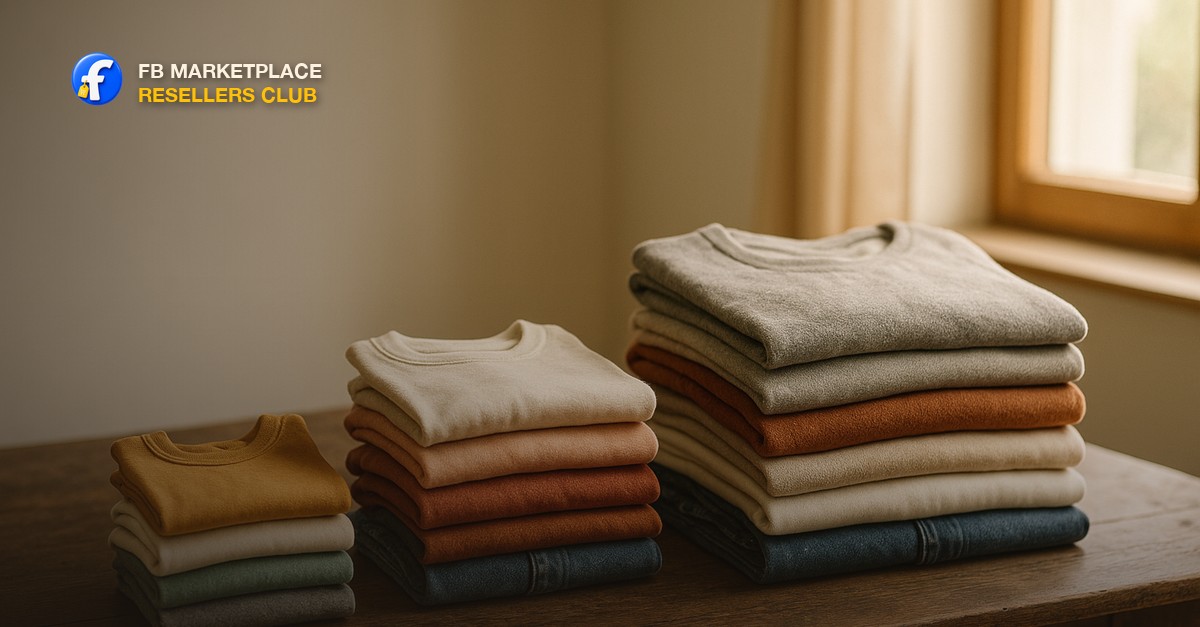
How to Flip Clothing on Facebook Marketplace
Buy name-brand and kids clothing cheap at thrift stores, garage sales, and estate sales, sort it by size and category, and sell it grouped as bundles instead of single items. A lone t-shirt or pair of jeans competes against every other lone t-shirt or pair of jeans in your area and almost never sells, no matter how fair the price. The same ten pieces sorted into a "Boys 4T Fall Bundle - 10 Pieces" or a "Women's Medium Workwear Lot" sell in days because you have removed the buyer's only real objection: piecing together a wardrobe from ten different sellers.
Why a Single Piece of Clothing Almost Never Sells
Clothing is the category where I see the most wasted listings in the community, and it is almost always the same mistake: someone photographs one shirt on a hanger, prices it at three or four dollars, and it sits untouched for six weeks. It is not a pricing problem. It is a demand problem. A single generic shirt has to be found by the one buyer, in the one size, who wants that exact item today, out of a search results page stacked with hundreds of nearly identical listings from other sellers clearing out closets.
A bundle changes the math entirely. A parent looking for a fall wardrobe for a 4-year-old is not comparing your listing against every single shirt in the size - they are comparing it against other bundles, and there are far fewer of those. You have moved from the most crowded search result on the platform to one of the least crowded, and you did it with the exact same inventory.
What Clothing Is Actually Worth Buying to Resell
What to buy, what to leave on the rack
| Category | Buy or skip | Why |
|---|---|---|
| Kids clothing, sorted by size (0-3mo through youth sizes) | Buy | Parents rebuy every few months as kids outgrow sizes, and they actively search for size-sorted bundles |
| Recognizable outerwear brands (Carhartt, North Face, Patagonia) | Buy | Sells as a single item, holds value even worn, and is easy to spot fast at a thrift store or estate sale |
| Denim from name brands (Levi's, Wrangler in good condition) | Buy | Consistent demand, easy to price against comps, sells as a single or bundled by size |
| Workwear and uniforms in bulk sizes (Dickies, scrubs, coveralls) | Buy | Steady local demand from tradespeople and students, bundles well by size |
| Fast-fashion basics with no name brand (plain tees, leggings, generic tops) | Skip | No standalone demand, and buyers do not pay for volume alone unless the lot is huge and priced near free |
| Anything stained, pilled, missing buttons, or with the tag cut out | Skip | Buyers can see condition in a photo before they message, and damaged pieces drag down a whole bundle's perceived value |
| Formal wear and single occasion pieces (prom dresses, suits) | Skip unless you know the exact local market | Narrow buyer window, sizing is picky, and it sits far longer than everyday clothing |
The pattern across the buy list is the same one that runs through [the best categories for Facebook Marketplace flipping](/blog/best-categories-for-facebook-marketplace-flipping): recognizable brands and predictable, recurring buyer need beat volume and variety every time. A closet full of random fast-fashion pieces is dead weight. A stack of size-6 boys clothing in good condition is inventory.
The Bundle-by-Size Rule
Sort everything by size first, category second, and never mix the two decisions. A bundle of "Women's Medium" tops and a separate bundle of "Women's Medium" workout gear will both sell. A bundle that mixes a men's large hoodie with a women's small skirt and a pair of kids' shoes will not, because no single buyer wants all three, and the bundle reads as a garage-clean-out instead of a curated lot.
- Sort every piece into a size pile first - this is the step most sellers skip and the reason most clothing bundles under-sell.
- Within each size, split by category: everyday tops and bottoms in one bundle, outerwear in another, athletic wear in a third. A parent shopping for school clothes and a parent shopping for a winter coat are different buyers even if the kid is the same size.
- Cap a bundle at roughly 8-12 pieces. Smaller than that and it does not feel like a real haul; larger than that and buyers assume you are dumping low-quality items to pad the count.
- Pull anything from a recognizable brand out of the bundle and list it alone first, the same way I pull a good cordless drill out of a tool bundle in [how to bundle items on Facebook Marketplace](/blog/how-to-bundle-items-on-facebook-marketplace) - a strong single item almost always earns more sold on its own.
Where to Source Clothing Worth Reselling
Thrift stores and estate sales are the two most reliable sources, and each rewards a different search habit. At a thrift store, work the racks by brand tag rather than by browsing outfits - flip through hangers checking labels, the same discipline covered in [thrift store sourcing for Facebook Marketplace](/blog/thrift-store-sourcing-for-facebook-marketplace). At an estate sale, clothing is frequently priced by the bag or box near the end of the sale, which is exactly when a whole closet of one size or one era can be bought as a single lot far below what it is worth split apart - the same late-sale pricing pattern covered in [estate sale sourcing](/blog/estate-sale-sourcing-guide).
Garage sales are hit or miss for clothing specifically, but when a family is clearing out kids' items after a growth spurt, the whole size is often boxed and priced to go fast, which is the exact haul the bundle-by-size rule is built for. Watch for that pattern the way I describe scanning a sale in [garage sale sourcing for Facebook Marketplace resellers](/blog/garage-sale-sourcing-for-facebook-marketplace-resellers).
Photographing and Titling a Clothing Bundle
Lay every piece flat, folded, and fully spread out in one photo so a buyer can count and identify each item without opening a description. The lighting and staging rules from [Facebook Marketplace photo staging basics](/blog/facebook-marketplace-photo-staging-basics) apply here directly, with one addition specific to clothing: photograph the size tag close-up as a second image. Buyers shopping clothing bundles message far less than buyers shopping other categories, because the size tag photo already answers the one question that usually starts the conversation.
- Fold and lay out every piece in the hero photo - no piles, no items still on hangers bunched together.
- Take a close-up photo of at least one size tag per size group in the bundle.
- List the piece count and item types in the description: "10 pieces: 4 shirts, 3 pants, 2 shorts, 1 jacket, all size 4T."
- Title by size and category, not just "kids clothes" - a title like "Boys 4T Fall Bundle, 10 Pieces" matches exactly what a parent is typing into search, the same principle covered in [why a listing stops getting messages](/blog/facebook-marketplace-listing-not-selling).
Pricing a Clothing Bundle
Price the bundle below what the pieces would total sold as singles, using real comps for the recognizable brands in the lot and the same per-piece logic from [how to price items on Facebook Marketplace](/blog/how-to-price-items-facebook-marketplace) for everything else. A 10-piece bundle with two name-brand pieces and eight generic ones prices differently than a bundle of ten unbranded basics - price the brands individually first, then add a flat rate for the rest.
A simple starting price ladder for clothing bundles
| Bundle composition | Rough starting price |
|---|---|
| 8-12 unbranded everyday pieces, good condition | $15-25 for the whole bundle |
| 8-12 pieces including 1-2 recognizable brand items | Price the brand pieces at their comp value, add $10-15 for the rest |
| Full outerwear set (coat, snow pants, boots) one size | $20-35 depending on brand and condition |
| Single recognizable brand item (Carhartt, Patagonia, name-brand boot) | Price alone using resale comps - do not bundle it |
The Clothing Mistakes That Kill the Sale
- Mixing sizes or genders in one bundle - a bundle has to serve one buyer's exact need, and mixed sizing turns a curated lot back into a rummage pile.
- Listing damaged or stained pieces in the same photo as good ones - it drags the perceived quality of the whole bundle down, even when most of the pieces are fine.
- Pricing by weight or bag count instead of by what is actually in the bag - buyers can tell the difference between a curated bundle and a dumped closet, and they price accordingly in how fast they scroll past.
- Skipping the size tag photo and making buyers ask for measurements - every question a buyer has to type before they can decide is a chance they close the app and move to the next listing instead.
My Own Clothing Rules
I run every clothing haul through the same short sort before it becomes a listing: pull anything from a name I recognize and price it alone, sort what is left by size, split each size by everyday versus outerwear versus athletic, and cap each bundle around ten pieces. That sort takes fifteen minutes and it is the difference between a box of clothes that sells this week and one that sits in my closet until the next donation run.
Short, practical drops on sourcing, pricing with comps, listing copy, and safe meetups. No spam, unsubscribe anytime.
Frequently asked questions
Does clothing sell well on Facebook Marketplace?
Single, generic clothing items rarely sell on Facebook Marketplace because they compete against hundreds of near-identical listings in the same size. Clothing sold as a size-sorted bundle, or a single recognizable brand item, sells far more reliably than a lone unbranded piece.
Should I sell clothes individually or as a bundle on Facebook Marketplace?
Bundle it, unless the piece is from a recognizable brand with real standalone resale demand (Carhartt, Patagonia, Lululemon, name-brand denim or boots). Everything else should be sorted by size and category and sold as a bundle, since a single generic item has almost no search advantage on its own.
What clothing is worth buying to resell on Facebook Marketplace?
Recognizable brands, kids clothing sorted by size, name-brand denim, and workwear in bulk sizes. Skip fast-fashion basics with no brand recognition and anything stained, pilled, or missing tags - those sit unsold even priced near free.
How many pieces should go in a clothing bundle?
Roughly 8-12 pieces per bundle. Fewer than that does not read as a real haul to a buyer, and more than that makes buyers assume low-quality pieces are padding the count.
How do I price a clothing bundle on Facebook Marketplace?
Price any recognizable brand pieces in the bundle individually using real resale comps, then add a flat rate for the remaining unbranded pieces. The total should sit below what every piece would cost sold separately, since that discount is what convinces a buyer to take the whole lot in one trip.
Last reviewed by Nicole on September 2, 2026