
How to flip china cabinets on Facebook Marketplace: the short answer
To flip china cabinets on Facebook Marketplace, buy solid cabinets cheap from people who are downsizing or clearing out a house, run the Glass-Doors-Box check before you pay, take the glass shelves out and split the cabinet into its two pieces for the move, clean it and fix the small stuff, then list it with lit-up photos and the measurements in the description. Skip cabinets with water damage at the base, a racked case that will not sit square or missing curved glass. Those eat your margin.
China cabinets flip a lot like other big case furniture, so if you have read the guides on how to flip dressers or how to flip furniture on Facebook Marketplace, most of the inspection habits carry over. What makes china cabinets different is glass and height. Both make the pickup and the delivery the hardest part of the flip.
What you need to know about how a china cabinet is built
Most china cabinets you will see on Marketplace are two pieces stacked together: a closed lower cabinet (often called the buffet or base) and a glass-front upper cabinet (the hutch) that sits on top. Knowing the parts helps you inspect it fast at a pickup and write a listing that answers the buyer's questions.
The parts of a china cabinet that matter to a flipper
| Part | What it does and what to check |
|---|---|
| Hutch (upper case) | The glass-front top that shows off dishes. Usually lifts off the base. Check how it attaches: some sit on pins or dowels, some are screwed or bracketed to the base |
| Base (lower case) | The closed lower cabinet with drawers and doors. Takes most of the weight. Check the feet, the bottom panel and the back corners for water damage |
| Glass doors and side panes | Flat glass can often be replaced by a local glass shop. Curved glass on bow-front or corner cabinets is harder and pricier to replace, so check it closely |
| Glass shelves | Often removable and easy to break. Count them against the shelf supports so you know none are missing |
| Shelf supports and hardware | Small pins, clips, knobs, hinges and latches. Missing pieces are a common reason cabinets sit unsold |
| Lighting | Many cabinets have a light in the top of the hutch. Plug it in and test it. A working light makes the listing photos much better |
You will also see corner china cabinets, single-piece curio cabinets with glass on three sides, and smaller hutches meant for a dining room wall. The same check applies to all of them. Curios have more glass, so take extra care.
The Glass-Doors-Box check
The Glass-Doors-Box check is how I recommend vetting a china cabinet before money changes hands. Glass is the part most likely to be cracked or missing and the hardest to transport. Doors tell you whether the case is still square. Box covers the cabinet itself, which is where water damage and loose joints hide.
- Glass. Look at every pane in the doors and sides with your phone's flashlight at an angle, which makes cracks and chips show up. Count the glass shelves and make sure each set of shelf supports has a shelf. Run a finger along the shelf edges for chips. Note whether any glass is curved, because that changes your repair cost and your risk on the move.
- Doors. Open and close every door and drawer. Glass doors should swing freely, line up with each other when closed and latch without being forced. Doors that drag or gap at the top usually mean the case has twisted. Drawers should slide without dropping or sticking. Check that every knob, hinge and latch is there.
- Box. Look under and behind the base. Swollen, flaking or stained wood on the bottom panel or the feet is a sign of water damage. Push gently on the hutch side to side. A little give is normal where it sits on the base, but the case itself should not rack or wobble. Smell inside the cabinet for mildew or smoke, which can be hard to get out.
Buying off a listing you have not seen in person? Ask for the exact height, width and depth of both pieces, whether the hutch lifts off, and which floor it is on. The answers decide whether you can move it at all. The guide to negotiation and safe meetups covers how to ask without scaring off the seller.
What is cheap to fix and what is not
A lot of china cabinets are good pieces with small, cheap problems. The margin comes from knowing which problems are a quick weekend job and which ones are a reason to walk away.
Common china cabinet problems, sorted by how worried to be
| Problem | How to think about it |
|---|---|
| Dull or dirty finish | Often a cleaning job. Clean gently first and see what the finish looks like before you decide on anything more |
| Missing knobs or shelf pins | Usually cheap to replace. Try to match the rest of the hardware, or replace a full set so it looks intentional |
| Loose or sticking doors | Often a hinge screw or a hinge that needs adjusting. Fix it before you list, because buyers open every door |
| Hutch light not working | Could be a bulb, a switch or the wiring. A bulb is easy. If you are not sure about wiring, list it as not working rather than guessing |
| Cracked flat glass in a door | Often replaceable by a local glass shop. Get a quote before you buy if it matters to the price |
| Cracked or missing curved glass | In my view, usually a pass. Curved glass is harder to source and replace |
| Water damage or swollen base | Hard to fix well. A pass for most flippers |
| Twisted or racked case | Doors will never line up right. A pass unless you know how to fix the joints |
If you are thinking about painting a cabinet, be careful with older painted pieces. In 1978 the federal government banned the sale of lead-based paint for use in homes, and refinishing old furniture is on the list of activities that can expose you to lead. Do not sand old paint unless you know what is under it, and in my view, a clean original wood finish is often an easier sell than a repaint anyway.
Which china cabinets are worth flipping
How to think about the common china cabinet types
| Type | What to watch for |
|---|---|
| Solid wood two-piece china cabinets | Often the best flips in my view, because they break down for the move and hold up to it. Check both pieces with the Glass-Doors-Box check |
| Smaller hutches and buffets | Easier to move and fit more homes and apartments. Some buyers want just the buffet for a dining room or entryway, so the base alone can sell |
| Corner china cabinets | Fit rooms where a full-width cabinet does not. Check for curved glass and measure carefully, since corner pieces are awkward to move |
| Curio cabinets | Lots of glass, often with lights and mirrored backs. Popular with collectors who display small items. Count every shelf and check every pane |
| Recognized furniture brands | Buyers often search by brand name. Look for a label or stamp inside a drawer or on the back and put the brand in the title |
| Pressed wood or laminate cabinets | Lighter and cheaper, but they do not take a move as well and often sell for less. Buy very cheap or skip |
If you do not know a brand, look it up before you pay. The guide to spotting brands worth flipping, in the Guides section of this site, covers how to research a name you have never seen before in a couple of minutes.
Where to find china cabinets to flip
- Marketplace itself: set saved searches for 'china cabinet,' 'china hutch,' 'curio cabinet,' 'buffet and hutch' and 'dining room set.' A dining set listing sometimes includes a matching cabinet that is not in the title.
- Estate sales: the dining room is the obvious place, but check the basement and garage too. Family members clearing an estate often want the big pieces gone first. The estate sale sourcing guide on this blog covers how to work them.
- Downsizing moves: people moving into smaller homes often have a china cabinet that will not fit. Free and very cheap listings that say 'must go by the weekend' are worth watching.
- Thrift stores: big furniture often sits longer at thrift stores because few shoppers can haul it. Check the furniture section often and ask about markdowns.
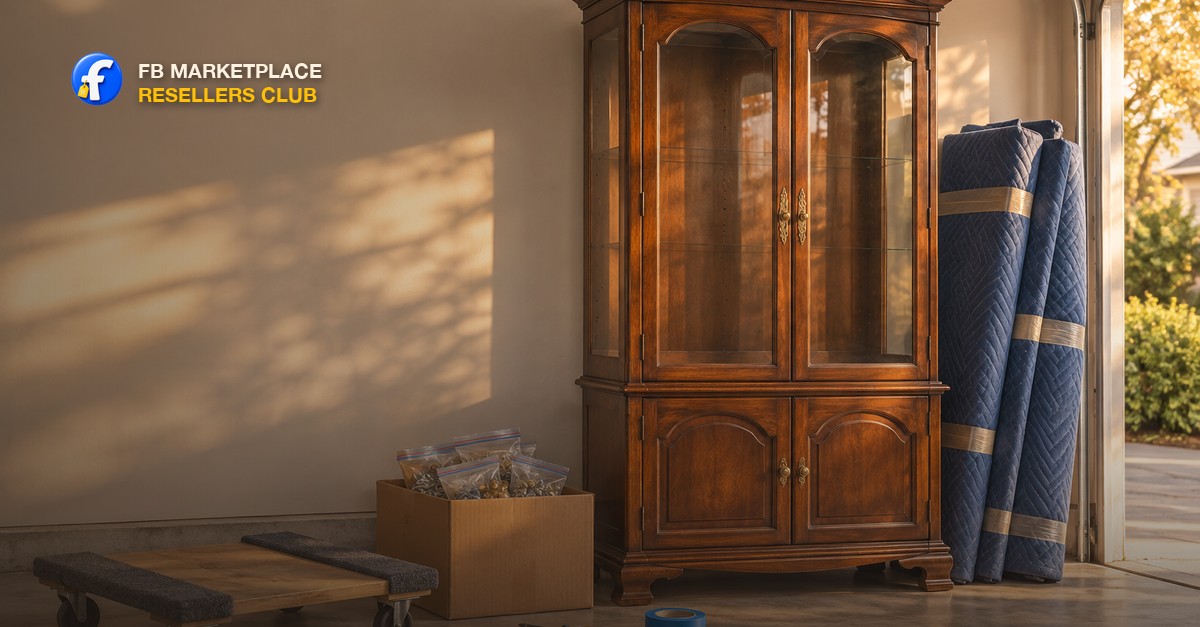
Bring a moving kit to every pickup: moving blankets, painter's tape, a screwdriver set, zip bags and a marker for hardware, straps and a dolly, and a second person. The safe meetup checklist in the Guides section applies when you are going into someone's home.
How to move a china cabinet without breaking it
Moving is where most china cabinet flips go wrong. A cabinet that leaves the seller's house in one piece and arrives at yours with a cracked door is a loss, not a flip.
- Take every glass shelf out first. Wrap each one in a blanket or towel and carry them separately, flat or on edge, never loose inside the cabinet.
- Bag and label all hardware: shelf pins, knobs, any screws or brackets holding the hutch to the base. Tape the bag inside a drawer of the base so it travels with the piece.
- Tape the doors shut with painter's tape so they cannot swing open. Do not put tape directly on old or fragile finishes for long; take it off as soon as you are home.
- Lift the hutch off the base. It is usually lighter than it looks but tall and top-heavy, so this is a two-person job. Move the two pieces separately.
- Wrap both pieces in blankets and strap them upright in the vehicle so they cannot tip or slide. Glass doors should face away from anything that could shift into them.
- Store the pieces upright in a dry room, glass shelves wrapped and stored flat nearby. More in the guide to storing and organizing flip inventory.
How to list a china cabinet so it sells
China cabinet buyers want to know three things: will it fit, is anything broken or missing, and how do I get it home? Answer all three in the listing, because each one you leave open turns into a message or a buyer who scrolls past.
- Title: type, wood or style, and the key selling point. For example: 'Solid Wood China Cabinet, Lighted Hutch, All Glass Shelves Included.' The post on listing titles that get clicks has more examples.
- Photos: the whole cabinet assembled with the hutch light on and a few dishes inside to show scale, then the doors open, the drawers open, close-ups of the glass, the hardware and any wear. The photo staging basics post covers lighting and backgrounds.
- Measurements: height, width and depth of both pieces, plus the total height assembled. This is the question you will get most if you leave it out.
- Description: what it is, what wood or material, how many glass shelves, whether the light works, how the hutch comes off and anything you fixed. The listing description builder in the Tools section keeps it tight.
- Delivery: if you can deliver, say so and say what it costs. Many buyers cannot move a china cabinet themselves, so offering delivery can be the difference between selling this week and sitting for a month. The guide on how to offer delivery on Facebook Marketplace covers pricing it.
Price off sold comps for similar cabinets near you, then run the numbers through the flip profit calculator with your gas, moving supplies, any glass or hardware and your time included. In my view, a clean, complete cabinet can be a good listing heading into the holidays, when some buyers are getting a dining room ready to host.
Common mistakes when flipping china cabinets
- Agreeing on a price before asking about measurements and which floor it is on.
- Moving the cabinet with the glass shelves still inside.
- Not counting the glass shelves against the shelf supports.
- Missing water damage on the bottom of the base because you never looked under it.
- Losing the shelf pins or the hutch brackets in the move.
- Sanding an old painted cabinet without thinking about lead paint.
- Leaving the measurements out of the listing and answering the same question ten times.
- Trying to move a full-size cabinet alone.
One thing you can do this week
Set saved searches for 'china cabinet,' 'china hutch' and 'curio cabinet,' then open five listings and look for the glass, the doors and the base in the photos. Message one seller and ask for the measurements of both pieces and whether the hutch lifts off, even if you do not buy, so you get used to asking before your first pickup.
Short, practical drops on sourcing, pricing with comps, listing copy, and safe meetups. No spam, unsubscribe anytime.
Frequently asked questions
Is flipping china cabinets on Facebook Marketplace worth it?
It can be, when you buy cheap from people who are downsizing or clearing an estate, the cabinet passes the Glass-Doors-Box check and you can move it safely. Sold comps near you should clear your price after gas, moving supplies, any repairs and your time.
How do I check a china cabinet before buying it?
Check every pane of glass and every glass shelf for cracks and chips, open and close every door and drawer to make sure the case is square, and look under and behind the base for water damage. Ask for the measurements of both pieces before you go.
How do you move a china cabinet without breaking the glass?
Take out every glass shelf and wrap it separately, bag and label the hardware, tape the doors shut, lift the hutch off the base and move the two pieces separately, wrapped and strapped upright. It is a two-person job.
Should I paint a china cabinet before selling it?
Not by default. A clean original wood finish is often an easier sell in my view. Be careful with older painted cabinets, since lead-based paint was not banned for home use until 1978 and refinishing old furniture can expose you to lead.
Can I sell the hutch and the base separately?
Sometimes. Some buyers want just the buffet for a dining room or entryway. If one piece is damaged, listing the good piece on its own can be better than discounting the whole set.
What should I put in a china cabinet listing?
The type, wood or style, measurements of both pieces and the total height, how many glass shelves it has, whether the light works, what you fixed and whether you deliver. Photos with the light on and a few dishes inside show scale and help it sell.
Last reviewed by Nicole on November 15, 2026